Are You Earning Up to Your Potential?
Most personal trainers are undervaluing their time and skills. Our Personal trainer Revenue Calculator helps you find out what you should be making, and how to get there.
No guesswork. Just real numbers.
.webp)
30-Minute Personal Training Session Ideas to Keep Your Clients Engaged
As a personal trainer, keeping your clients motivated and engaged during their sessions is essential to helping them achieve lasting results. Creating 30-minute personal training session ideas that are both efficient and fun can be challenging, especially when clients expect variety and visible progress. This guide shares proven personal training workout ideas you can deliver in short sessions using modern tools like personal training software for online training to plan, track, and adapt programs seamlessly.
High-Intensity Interval Training (HIIT)
One of the most effective ways to maximize a 30-minute session is to incorporate high-intensity interval training (HIIT). HIIT workouts involve short bursts of intense exercise followed by periods of lower-intensity recovery. These workouts burn more calories in less time and keep your clients' heart rates elevated, allowing them to continue burning calories even after their session has ended.
For example, you could have your client perform 30 seconds of jump rope followed by 30 seconds of rest and repeat this cycle for ten rounds. Or, have them complete a circuit of bodyweight exercises like push-ups, squats, and lunges, with minimal rest between each exercise.
The beauty of HIIT is that it can be tailored to any fitness level, making it an excellent option for both beginner and advanced clients.
Strength Training: The Key to Unlocking Fitness Goals
For clients looking to build strength and muscle, 30-minute strength training sessions can be efficient. The key is to focus on compound exercises that work multiple muscle groups simultaneously. This saves time and helps clients burn more calories and develop functional strength.
Some great compound exercises to incorporate into your 30-minute sessions include:
- Squats (single leg, goblet, or barbell variations)
- Deadlifts
- Push-ups (or variations like decline or diamond push-ups)
- Rows (dumbbell, kettlebell, or TRX)
- Lunges (forward, reverse, or lateral)
You can incorporate circuit training by combining these exercises with minimal rest to keep things interesting. For example, you could have your client perform ten squats, push-ups, and rows and repeat this circuit for three to four rounds.
Remember to emphasize proper form and technique to prevent injuries and ensure your clients get the most out of each exercise.
Stability Ball Exercises: Challenging Balance and Core Strength
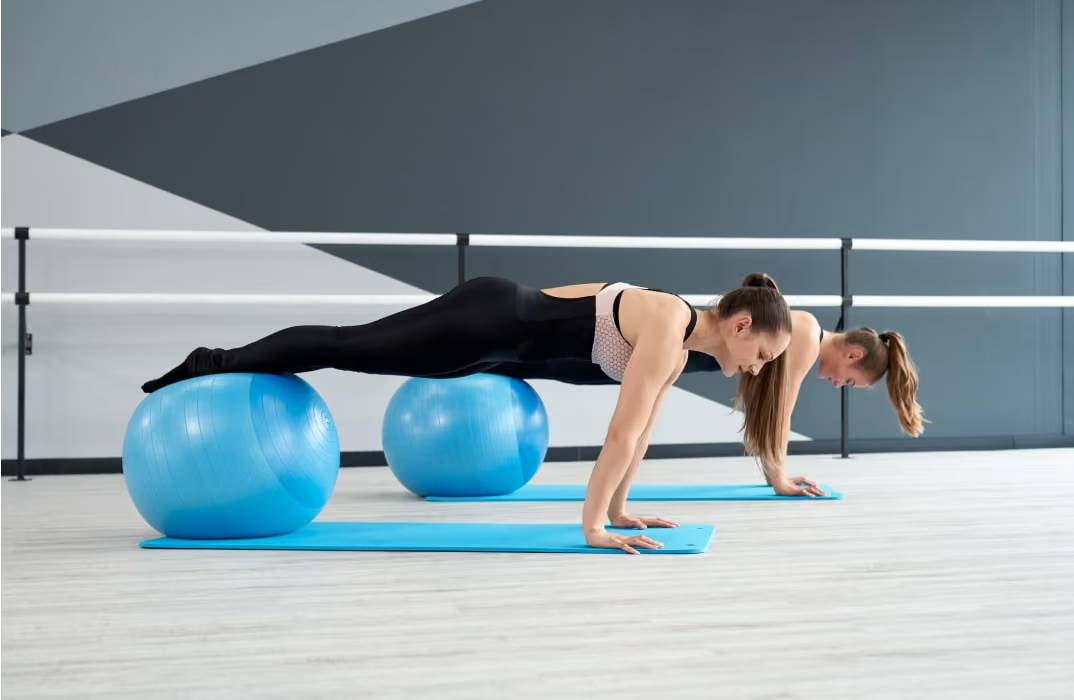
Incorporating stability ball exercises into your 30-minute sessions is an excellent way to challenge your clients' balance and core strength. These exercises work the abs and obliques and engage the smaller stabilizing muscles throughout the body.
Some excellent stability ball exercises to try include:
- Stability ball crunches
- Stability ball planks
- Stability ball push-ups
- Stability ball hamstring curls
- Stability ball wall squats
You can also use the stability ball as a prop for other exercises, such as dumbbell presses or rows, adding an extra element of instability and core engagement.
💪 Got an idea for a brand? Let's bring it to life.
Launch your own fitness app with FitBudd in minutes!
💪 Got your brand name? Let’s bring it to life.
Launch your own fitness app with FitBudd in minutes!



88% trainers worldwide gave us 5 stars
Transform your fitness business with the power of your branded app on iOS and Android.
Try for FREEElliptical Trainer: Low-Impact Cardio for All Fitness Levels
For clients who prefer low-impact cardio or are recovering from injuries, the elliptical trainer can be a fantastic option for a 30-minute session. It is accessible on the joints and allows your clients to work their upper and lower body simultaneously, making it an efficient full-body workout.
To keep things interesting, you can incorporate intervals by having your client alternate between higher and lower resistance levels or faster and slower paces. You could also have them incorporate upper-body movements like bicep curls or shoulder presses while using the elliptical trainer.
Remember, the key to keeping your clients engaged is constantly mixing things up and challenging them in new ways.
Kettlebell Swings: A Full-Body Workout in a Single Exercise
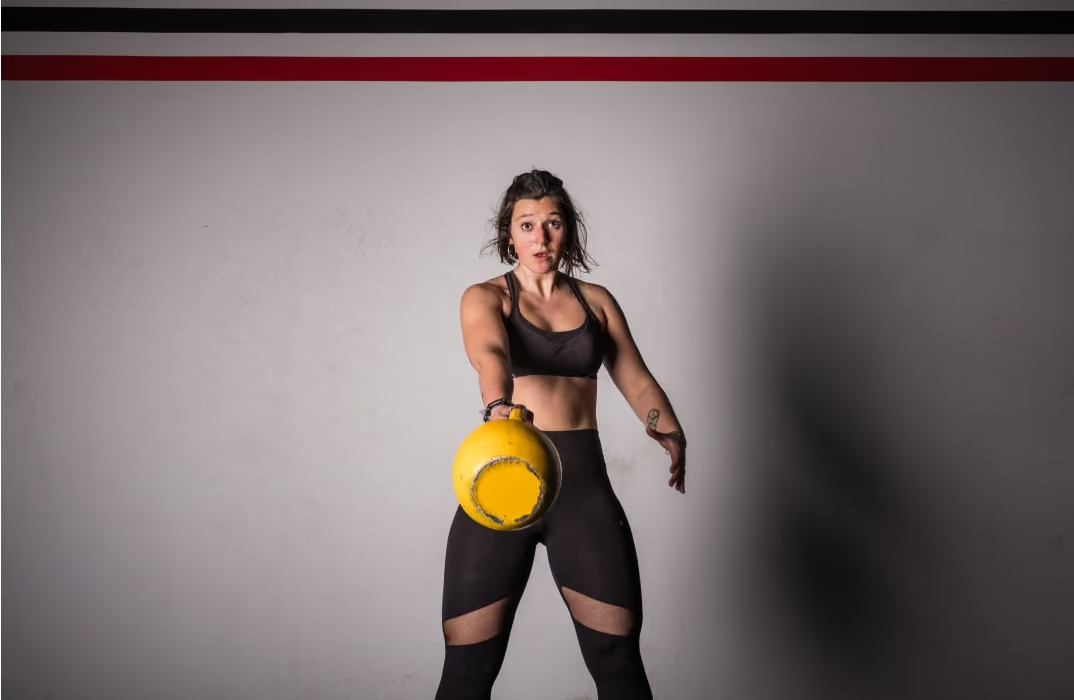
Suppose you're looking for a single exercise that can quickly give your clients a full-body workout; look no further than the kettlebell swing. This dynamic exercise works the legs, core, shoulders, and back, making it a fantastic addition to any 30-minute session.
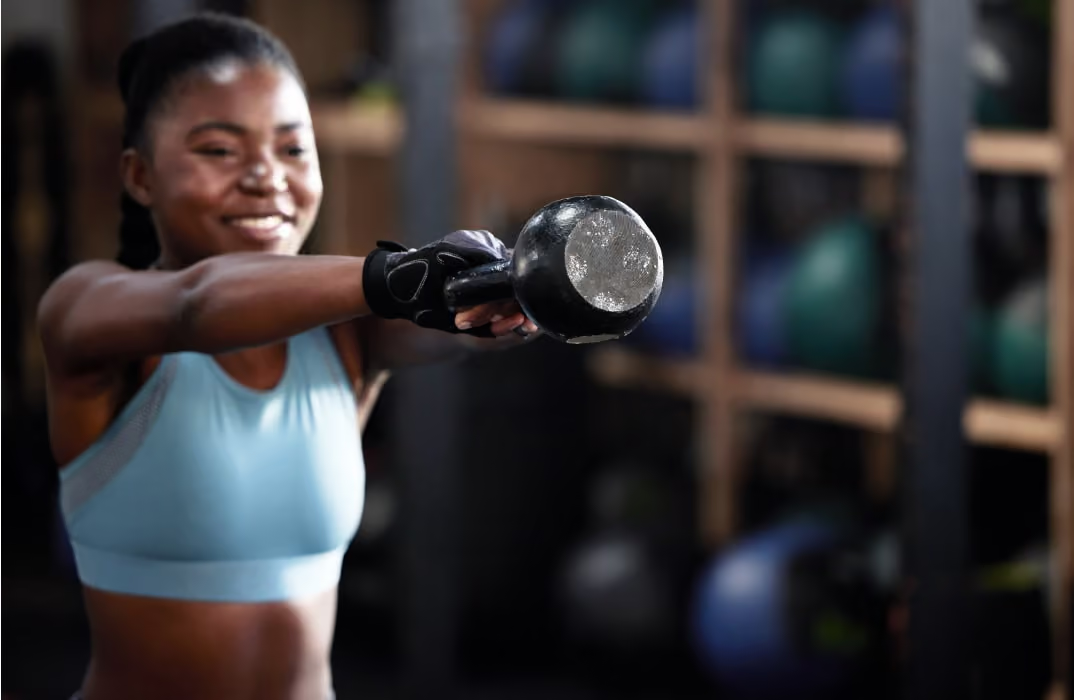
Start by teaching your clients proper form and technique, as kettlebell swings can be challenging for beginners. Once they've mastered the movement, you can incorporate kettlebell swings into circuits or HIIT workouts for a genuinely intense full-body burn.
For example, you could have your client perform 20 kettlebell swings followed by ten push-ups and repeat this circuit for five rounds.
Battle Ropes: A Full-Body Challenge
Consider incorporating battle ropes into your routine for a unique, intense 30-minute session. These heavy, undulating ropes provide an incredible full-body workout and add an element of fun and excitement that can help keep your clients engaged.
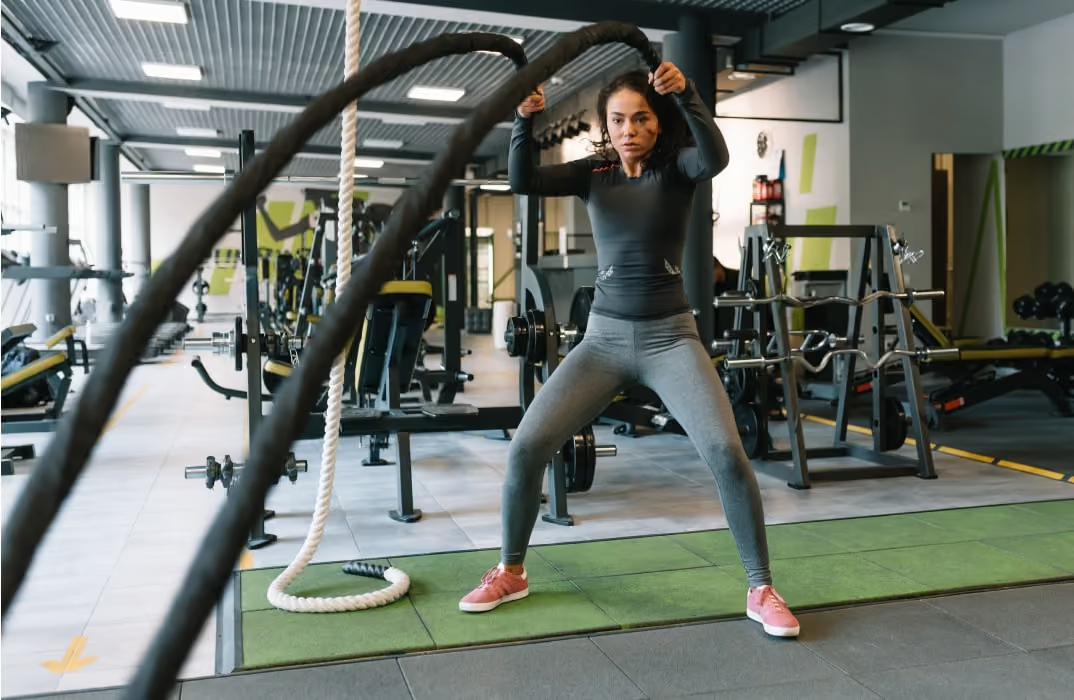
Battle rope exercises can be tailored to target specific muscle groups or used as a full-body conditioning tool. For example, you could have your clients perform alternating waves with the ropes, focusing on engaging their core and upper body. Or, you could incorporate battle rope slams, which work the entire body while providing a stress-relieving outlet.
You can alternate between battle rope exercises or incorporate them into circuits with equipment like kettlebells or medicine balls to keep things interesting.
Bodyweight Circuits
Sometimes, the most straightforward workouts can be the most effective, and bodyweight circuits are a prime example. These equipment-free sessions challenge your clients' strength and endurance and promote functional movement patterns that translate to real-world activities.
To design a practical bodyweight circuit, combine exercises that target different muscle groups, such as push-ups for the chest and triceps, squats for the legs and glutes, and planks for the core. You can also incorporate plyometric movements like jump squats or burpees to add a cardiovascular component.
One of the benefits of bodyweight circuits is that you can easily modify them to suit different fitness levels. For beginners, you can simplify the exercises or reduce the number of reps, while for more advanced clients, you can increase the difficulty by adding variations or increasing the intensity.
Medicine Ball Muscle Blitz
Medicine balls are incredibly versatile equipment that can be incorporated into various exercises, making them a great addition to any 30-minute personal training session. Not only do medicine ball exercises challenge your clients' strength and power, but they also engage stabilizing muscles and promote functional movement patterns.

One of the best ways to utilize medicine balls is through compound exercises that work for multiple muscle groups. For example, you could have your clients perform medicine ball slams simultaneously, targeting the legs, core, and upper body. Or, you could incorporate medicine ball rotational throws, which challenge the obliques and improve rotational power.
For beginner clients, start with lighter medicine balls and focus on proper form and technique. As they progress, you can gradually increase the weight or incorporate more complex exercises, such as medicine ball push-ups or single-leg squats with a medicine ball held overhead.
In addition to strength exercises, medicine balls can be used for cardio drills, such as medicine ball running or burpees. These high-intensity exercises will increase your clients' heart rates and quickly provide a full-body challenge.
Remember to emphasize good posture and core engagement throughout the movements to prevent back injuries and maximize the benefits of each exercise.
Resistance Band Remix
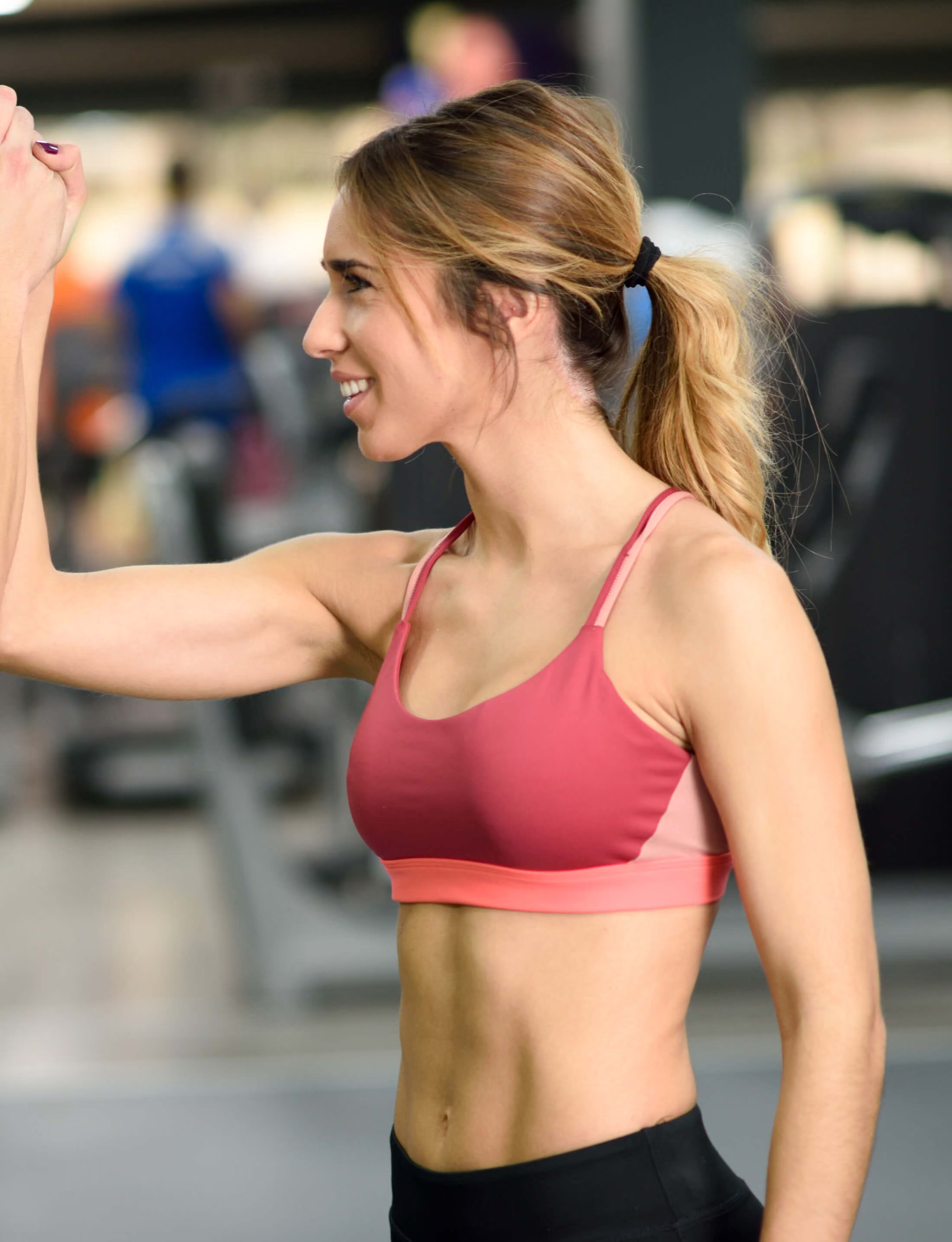
Resistance bands are incredibly versatile and affordable equipment that can create challenging full-body workouts. In a 30-minute session, you can have your clients work through a series of resistance band exercises that target all major muscle groups.
Start with lower-body exercises like squats, hip thrusters, and lateral walks, using the resistance bands to add extra tension and resistance. Then, transition to upper-body movements like rows, bicep curls, and chest presses, incorporating different grip positions and band placements to vary the intensity.
Have your clients perform resistance band woodchoppers, the Palloff presses, or even resistance band planks for a core challenge. These exercises engage the deep, stabilizing muscles of the midsection.
Resistance bands are also great for mobility work and active stretching, so consider incorporating some dynamic movements into your warm-up or cool-down to improve your clients' range of motion and flexibility.
Tabata: Maximum Effort in 4 Minutes
Tabata training is a must-try for a genuinely intense and time-efficient workout. This protocol, developed by Japanese scientist Dr. Izumi Tabata, involves 20 seconds of maximum effort followed by 10 seconds of rest, repeated for eight rounds, for a total of just 4 minutes.
While it may sound deceptively simple, Tabata workouts are notorious for their intensity and ability to push your clients to their limits. The key is to choose exercises that engage multiple muscle groups and can be performed with maximum effort for those 20-second intervals.
Burpees, mountain climbers, squat jumps, and high knees are great for Tabata workouts. For added challenge, you can combine multiple exercises into a circuit.
Despite their short duration, Tabata workouts are not for the faint of heart. Be sure to properly warm up your clients and emphasize the importance of giving maximum effort during those 20-second intervals.
Warm-Up and Cool-Down: The Bookends of a Successful Session
While the meat of your 30-minute session focuses on the workout itself, paying attention to the importance of a proper warm-up and cool-down is essential. Many trainers must rush through these crucial components, but taking the time to properly prepare your clients' bodies for exercise and help them recover afterward can make a difference.
For the warm-up, consider incorporating dynamic stretches, foam rolling, and light cardio to increase blood flow and prepare the muscles for the workout. This procedure helps prevent injuries and ensures clients are ready to give their all during the session.
During the cool-down, focus on static stretching and light mobility exercises to help reduce muscle soreness and promote recovery. You can also incorporate foam rolling or other self-myofascial release techniques to help alleviate any tightness or knots that may have developed during the workout.
Remember, the warm-up and cool-down should each last 5-10 minutes, leaving you with 20-25 minutes for the central portion of your workout.
Listening to Your Clients: The Key to Keeping Them Engaged
The most important thing is to listen to your clients and tailor your sessions to their needs, goals, and preferences. Be bold, ask for feedback, and adjust your approach accordingly.
For example, if you have a client who struggles with knee pain, focus more on lower-impact exercises and avoid excessive squatting or jumping movements. Or, if you have a client who gets bored quickly, you may need to switch things up more frequently and incorporate various exercises and equipment to keep them engaged.
Remember, your role as a personal trainer is to design effective workouts and deliver a personalized experience that adapts over time. Using gym CRM software or fitness trainer software can help track feedback, preferences, and progress automatically—so you can tailor every 30-minute session to the client’s goals. This makes every workout data-driven, personal, and far more motivating.
Final Thoughts
Creating engaging 30-minute personal training sessions is an art form that requires creativity, knowledge, and a deep understanding of your clients' needs and goals. Incorporating various exercises, equipment, and training styles challenges your clients to be motivated and excited about their workouts.
Whether focusing on HIIT, strength training, or combining both, the key is constantly switching things up, emphasizing proper form and technique, and listening to your client's feedback. With these strategies in your arsenal, you'll be well on your way to delivering unforgettable 30-minute sessions that keep your clients coming back for more.
So, what are you waiting for? Start implementing these ideas today and watch your clients transform not just their bodies but their entire outlook on fitness.


Meet the author
Suchandra Das
A versatile writer with a keen eye for detail, specializing in creating engaging content for diverse industries.
Frequently Asked Questions

Yangzey Sherpa leads content strategy at FitBudd, overseeing content planning and execution across fitness-focused digital channels. With over five years of experience in SEO and content, she works closely with the fitness industry to ensure content aligns with the needs of coaches, trainers, and gym owners. Her role keeps her deeply connected to fitness business workflows, coaching models, and how professionals use digital platforms to grow.


Apra Pathak has worked closely within the fitness niche for several years, supporting personal trainers and fitness coaches through content and digital marketing initiatives. Her experience centers on understanding how fitness professionals build visibility, communicate value, and engage clients online. Through sustained involvement with fitness-focused platforms and audiences, she has developed a strong understanding of the digital needs and growth challenges faced by modern fitness businesses.

Aishwarya Mehra has been actively involved in fitness-focused digital marketing, working closely with brands and platforms that serve coaches, trainers, and fitness businesses. Her experience spans engagement-driven strategies designed specifically for fitness audiences. Through ongoing exposure to fitness campaigns and communities, she remains closely aligned with how fitness professionals attract, convert, and retain clients in digital environments.

Suchandra Das has contributed content within the fitness niche, working on resources designed for coaches, trainers, and fitness business owners. Her experience involves supporting fitness-related topics with clear, structured, and accessible content. Through consistent involvement with fitness-focused platforms, she has developed familiarity with coaching workflows, client communication, and the informational needs of fitness professionals.
FitBudd is a fitness technology platform built exclusively for coaches, personal trainers, gym owners, and fitness professionals. The platform supports fitness businesses through branded apps, white-labeled solutions, and websites designed around real coaching and training workflows. FitBudd works closely with the global fitness community, maintaining deep, ongoing involvement in the fitness industry.

Ankit Uniyal has worked extensively with fitness-focused content, supporting platforms that cater to personal trainers, gym owners, and fitness professionals. His experience includes optimizing and structuring content around fitness-related search behavior and user intent. Through continued involvement in the fitness niche, he has gained a strong understanding of how trainers and coaches build discoverability and authority online.

Saumya Mittal is the Co-Founder and CEO of FitBudd. Since 2021, she has been actively engaged in the fitness technology sector, collaborating with global fitness companies to foster digital growth and scalable operations. With over a decade of experience leading high-impact projects in engineering and operations, Saumya has a strong background in developing reliable and scalable systems. Through FitBudd, she is dedicated to addressing the evolving needs of fitness professionals worldwide.

Kinshuk Snehi has been closely involved in the fitness space for over four years. Through his work at FitBudd, he has contributed to shaping how fitness professionals build their online presence, attract clients, and scale sustainable coaching businesses. Deeply interested in the intersection of fitness, technology, and growth, Kinshuk brings a hands-on understanding of the challenges faced by modern trainers. His passion lies in building systems and strategies that support long-term consistency, both in fitness journeys and business growth.

Kanika Verma has been closely involved in building solutions for the fitness industry, working with platforms used by coaches and trainers globally. Her experience includes direct exposure to fitness coaching workflows and operational needs. Through sustained involvement in fitness-focused product development, she has developed a strong understanding of how fitness professionals manage clients, programs, and daily operations.

Tanya Sharma has worked on branding initiatives within the fitness niche, supporting fitness platforms and businesses with visual identity design. Her experience includes creating brand systems used by coaches, trainers, and fitness-focused products. Through ongoing involvement in fitness-related design projects, she remains closely connected to how fitness brands communicate trust and professionalism.

Niharika Sonavane has contributed to visual design projects within the fitness industry, supporting platforms and brands serving fitness professionals. Her experience spans creating digital assets used across fitness apps, websites, and marketing materials. Through continued work in the fitness niche, she remains closely aligned with the visual communication needs of coaches and fitness businesses.

Elesh Patel has worked extensively on marketing initiatives within the fitness niche, managing paid campaigns for fitness-focused products and services. His experience includes supporting platforms that target personal trainers, gym owners, and fitness creators. Through long-term involvement in fitness marketing, he remains closely connected to how fitness professionals discover and adopt digital tools.


Creative Fitness Challenges Ebook
Discover exciting challenges to boost your workouts and keep your fitness journey thrilling.
Download Now
Templates
These functional templates have the power to make any fitness trainer's life easier.
Subscribe To
Our Blog